
The Box on the Doorstep
Why a novel about knowing the date of your death feels eerily like a warning about America today

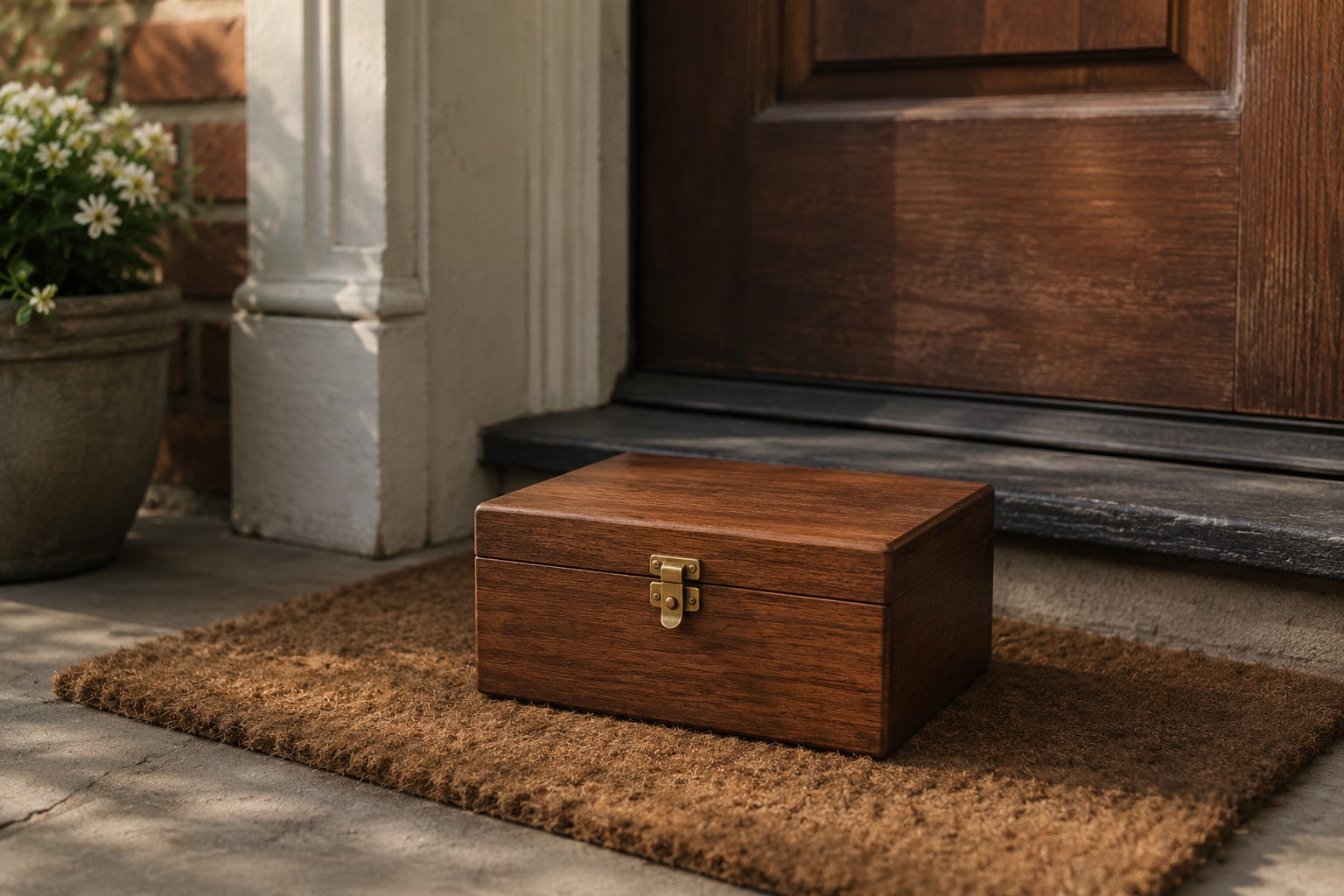
One morning, everyone in the world (over 22 years of age) wakes up to find a small wooden box on their doorstep. Inside is a string that indicates how long they will live.
On the box is written, “The measure of your life lies within.”
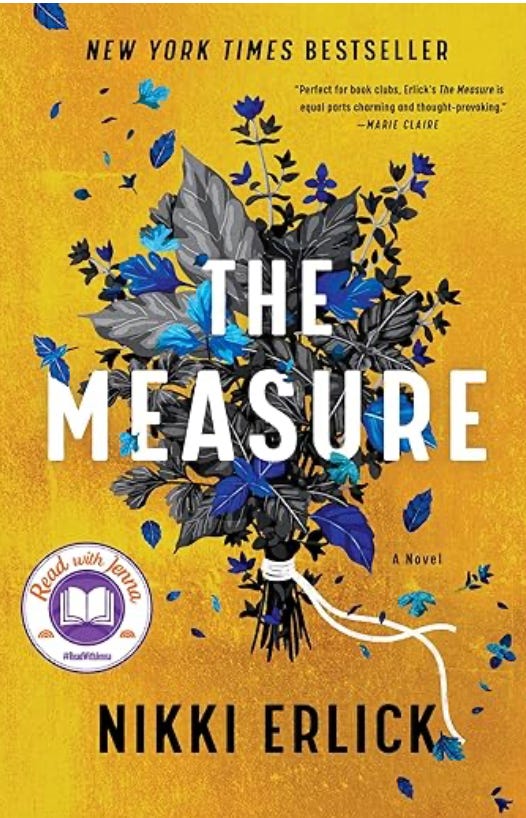
That is the premise of Nikki Erlick’s novel The Measure.
In the beginning, it feels as though the book is about death and what you would do with the time you have left.
However, the question at the heart of the novel is what happens when a society allows a single piece of information to determine who matters, who belongs, and who can/should be treated differently. It’s what makes The Measure feel less like hypothetical fiction and more like a dispatch from the America we are living in now.
What made the book so compelling to me is Erlick’s exploration of both the personal and political consequences. Friendships, marriages, careers, and family decisions are reshaped. Institutions change as well. The government makes new rules, employers discriminate, politicians exploit fear and entire social identities emerge around “short-stringers” and “long-stringers.” Society is left with deep division.
As the story unfolds, the real question is no longer about the length of the strings but about what happens when those strings become more important than the people holding them.
I see several parallels in today’s America and in recent articles I’ve written.
1. The Creation of “Acceptable” and “Unacceptable” Citizens
In the novel, people become categorized by string length.
In contemporary America, people are increasingly sorted by other markers, including immigration status, voting eligibility, gender identity, race, political affiliation, educational background, and religion.
The specific category changes. The mechanism doesn’t.
It seems every era invents a new string.
The danger isn’t the category itself. The danger is what happens when institutions decide that one category deserves fewer rights, less dignity, or less opportunity.
2. The Politics of Fear
In The Measure, fear spreads faster than facts.
People begin making assumptions about others based on incomplete information. Politicians discover that fear is useful. Social trust deteriorates.
Sound familiar?
One of the recurring themes in my writing is that fear is a powerful political tool. When people are afraid, they are often more willing to exclude others, concentrate power, and overlook actions they would normally question.
The strings function almost like a national anxiety machine. It’s interesting because, in the book, other countries react differently than America.
Modern politics often makes use of fear. Fear of immigrants. Fear of crime. Fear of economic insecurity. Fear of retaliation.
The specifics vary but fear remains the fuel.
3. Bureaucratic Discrimination
This feels especially aligned with my recent post, The Politics of Paperwork.
One of the most unsettling aspects of The Measure is that discrimination becomes normalized through systems rather than explicit cruelty. Employers start to ask certain questions, insurance companies adjust their policies, and institutions quietly incorporate string length into decision-making.
Nobody has to announce oppression.
The paperwork does it quite handily.
That feels remarkably relevant to contemporary debates about voter registration, immigration enforcement, government databases, and administrative barriers to participation.
The novel demonstrates something you, dear reader, already understand. Democracy rarely disappears all at once. It disappears through forms, procedures, and “reasonable” exceptions.
4. Hyper-normalization
In The Emergency We Are Learning to Ignore, I discuss hyper-normalization, the process by which people adapt to increasingly abnormal conditions because confronting them feels overwhelming.
The characters in The Measure do exactly that. At first the boxes are shocking. Then people adapt and begin to organize society around them.
Reading those pages, I wondered whether this is just what human beings do. We adjust. We accommodate. We normalize.
Eventually, the shocking becomes ordinary.
Have Americans become accustomed to events that would once have dominated the national conversation?
The point is not any single incident. The point is how quickly the extraordinary can become ordinary.
The Choice We Still Have
What ultimately saves The Measure from becoming a dystopian morality tale is its reminder that no one piece of information can fully define a human being.
Those who flourish are not necessarily the ones with the longest strings. They are the ones who refuse to let that information define the entirety of their lives. In many of these characters, I saw courage over caution, love over fear, and solidarity over division.
The same choice confronts us today.
We cannot always control the categories and labels society creates. But we can decide whether those labels become the most important thing we see.
Democracy depends on that choice.
The moment we begin seeing people primarily as immigrants, conservatives, liberals, Christians, Muslims, urban voters, rural voters, citizens, non-citizens, or members of some other category, we risk losing sight of their humanity.
The lesson I found in The Measure is that information becomes dangerous when it replaces empathy.
The weak point, if there is one, is that some readers may find the metaphor a bit transparent. You can spot it almost from the beginning.
It was more of a thought experiment about prejudice, fear, and social power structure. For readers interested in democracy, power, and civic life, that is precisely what makes the book worthwhile.
This Week’s Democracy Challenge
Get curious before you judge
When you encounter someone whose views, background, or experiences differ from your own, try asking a question before making an assumption. Curiosity is one of the most powerful antidotes to fear.
It happened to me a while ago at a going-away party for a friend. All of us had known each other for many years except for one person. A subject matter came up that we probably assumed we all agreed upon…until that one person spoke up with a radically different and fervent viewpoint. I could feel the room shift immediately, and not in a good way. I could feel myself write this person off in my mind, completely!
Practice seeing the person
The next time you’re tempted to dismiss someone because of a label, pause and imagine the rest of their story. Every person carries experiences, hopes, fears, and struggles that no category can fully capture.
My dear friends, Yvonne St. John Dutra and Rich Dutra St. John, co-founders of Challenge Day, always began workshops with an exercise they called, “If You Really Knew Me.” Participants completed the sentence, "If you really knew me, you'd know that..." You could say, if you really knew me, you’d know that my favorite color is green. Or, you could reveal a deeper level of yourself. Of course, the deeper level was always encouraged. When one person had the courage to share something more intimate, it gave permission for others to follow.
The exercise worked because it stripped away labels. For a few moments, people stopped being young or old, executives or employees, Democrats or Republicans. They simply became human beings sharing their stories.
There’s always more to someone than the label we see first if we are willing to ask a question and then listen.
Had I been more curious about how that person at the party arrived at their point of view, would I have seen them differently? I have since been with them at another event. Though I was nice, I basically dismissed them. I’ll try again!
So, what are the “strings” we are using today, and what happens when they become more important than the people holding them?
Keep asking the questions that matter,
Donna
P.S. Thanks, Nanc!
Dinner Conversation Topic
Would you open the box?
If a box appeared on your doorstep tomorrow and revealed exactly how long you would live, would you open it?
Would you open it immediately or wait?
Would you tell your spouse or family?
Would knowing change how you spend your time?
I’d love to be a fly on the wall during this dinner party!
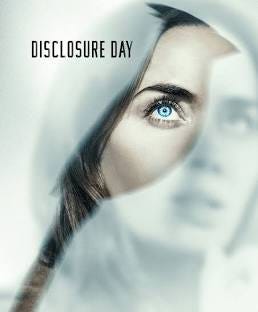
Bonus recommendation: I can also highly recommend Steven Spielberg’s latest film, Disclosure Day. Hugo, played by Colman Domingo, says at one point, “Empathy is the core of animate existence, our ultimate evolutionary advantage.”
That feels like a lesson worth remembering, whether we are holding a string, a label, or simply an opinion about someone else.
Such a wonderful piece, as always, full of wisdom. Thank you for sharing. I would not open the box for fear of the impact it may have on me, my family, and friends. The older I get the more I begin to treasure not only my days, but the days of my family and friends. I've lost both too early and had to deal with mortality sooner than I wanted. It was then that the value of time - mine and others - increased exponentially. Fear has been replaced with gratitude, oddly enough, a benefit of the losses. May you live a long and blessed life. A fan, David
I read that book also Donna, and enjoyed the parallels you pointed out. I think curiosity would get the better of me to open the box,...but then I wouldn't 100% believe it anyway :)